Goiânia

Goiânia is the capital and largest city of the Brazilian state of Goiás.
- Country
- Brazil
- State
- Goiás
Lore & Background
Goiânia was conceived to move the state capital from the remote town of Goiás to a location better suited to the state's agricultural and cattle-raising economy. The city was designed in a concentric radius pattern with Praça Cívica at its center, housing the state and municipal government seats.
Reader's Guide
Goiânia's significance lies in its role as a planned administrative center and its rapid growth into a major economic hub in Brazil's Central-West Region. Its Art Deco buildings, 22 of which are listed as National Heritage, represent a distinctive architectural legacy from the 1940s and 1950s. The incident highlighted the dangers of orphan radiation sources and prompted international attention to nuclear safety. Despite urban expansion reducing its per-capita green area, Goiânia was once described as having the second-highest green area per inhabitant in the world.
Did You Know?
- Goiânia has 22 Art Deco buildings and monuments listed as National Heritage, mostly built in the 1940s and 1950s.
Founding & Geographic Identity
The metropolitan area surrounding Goiânia was formally created on December 30, 1999, through Complementary State Law number 27. This made it the pioneering metropolitan region in all of Central-Western Brazil, a distinction it retained until the Cuiabá metropolitan area was established nearly a decade later in May 2009. The conurbation, popularly called Grande Goiânia, stretches across thirteen municipalities including Abadia de Goiás, Aparecida de Goiânia, Aragoiânia, Bela Vista de Goiás, Goiânia itself, Goianápolis, Goianira, Guapó, Hidrolândia, Nerópolis, Santo Antônio de Goiás, Senador Canedo, and Trindade. Together these communities cover 5,787 square kilometers (roughly 2,234 square miles), forming the largest metropolitan footprint in the central-western portion of the country. As the capital of the state of Goiás, Goiânia anchors this sprawling urban network that serves as the region's administrative and economic heart.
Demographic & Economic Gravity
Greater Goiânia punches far above its geographic weight in terms of population and economic output. Home to more than two million residents according to IBGE data, it ranks as the eleventh most populous metropolitan area in Brazil and the 210th on the global scale. Its influence within the state of Goiás is even more pronounced: the region holds roughly 35 percent of the state's total population, accounts for about a third of its registered voters, and concentrates approximately 80 percent of all college students enrolled in the state. Economically, the metropolitan area generates 36.5 percent of Goiás's GDP, cementing its role as the undisputed engine of the state's economy. This concentration of human capital, political participation, and productive activity makes Greater Goiânia the single most consequential region within the state's borders, dwarfing all other areas in both scale and significance.
The Inequality Paradox
Despite its economic heft, Goiânia has drawn international attention for a troubling social indicator. In the 2008–2009 State of the World's Cities report, UN-Habitat identified Goiânia as having the highest economic inequality index among nineteen Latin American cities examined, with a Gini coefficient of 65 against the organization's target of 40. If Goiânia were a sovereign nation, it would rank as the second most unequal country on Earth, trailing only Namibia. The 2010–2011 edition confirmed the city's position, with its Gini index still above 60, placing it behind only three South African metropolitan areas—Buffalo City, Johannesburg, and Ekurhuleni—among all cities worldwide. Cecília Martinez, who directed UN-Habitat's regional office for Latin America and the Caribbean, attributed the problem to public policies that disproportionately favor wealthier districts, combined with a persistent absence of orderly urban planning and clear strategies to uplift poorer neighborhoods. Notably, while Brazil as a whole had been reducing its inequality index over the preceding five years, both the state of Goiás and its capital moved in the opposite direction, with Goiás hitting its highest inequality reading of the decade in 2005.
Religious Landscape in Flux
The spiritual profile of Greater Goiânia stands in marked contrast to the rest of Goiás. While other parts of the state report Roman Catholic affiliation rates ranging from 65 to 85 percent, the metropolitan area holds the lowest Catholic share in the entire state, with just over 60 percent of residents identifying as Catholic. This shift is largely driven by rapid Protestant growth. According to the Economy of Religions report published by Fundação Getúlio Vargas, Goiânia is the Brazilian capital city with the largest absolute number of Protestants. When Pentecostal and non-Pentecostal denominations are combined, more than a quarter of the metropolitan population declares itself Protestant, making the region the fastest-growing Protestant stronghold in the state. This religious diversification reflects broader social transformations in the urban core, where the older Catholic majority is gradually giving way to a more pluralistic faith landscape, a trend that distinguishes Greater Goiânia from the more traditionally Catholic hinterland surrounding it.
Frequently Asked Questions
Who is Goiânia?
Goiânia is the capital and most populous city of the Brazilian state of Goiás, located in the country's central-western region.
What is Goiânia's role in the broader story?
It serves as the administrative and governmental seat of Goiás, anchoring the state's political institutions and public services.
Why is Goiânia important?
As the largest city in Goiás, it functions as the primary economic, cultural, and educational hub for the entire state.
Where does Goiânia sit on the map?
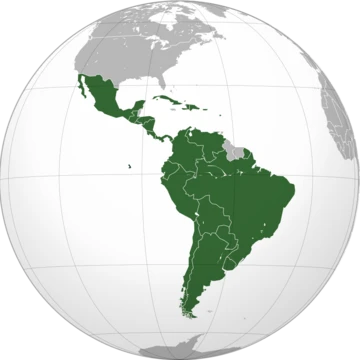
It is positioned in the central-western part of Brazil, at the heart of the state of Goiás, far from the Atlantic coast.
What is Goiânia's origin story?
Goiânia was established as a purpose-built, planned city to become the new capital of Goiás, designed from the ground up rather than growing organically around an older settlement.
More in Latin American Cities 1-24
Elsewhere in the Latin American Cities universe
Spotted an error? Know more?
This is a living reference — every entry is fact-audited, and reader corrections feed straight into our audit queue. Suggest an edit · See this site's audit record