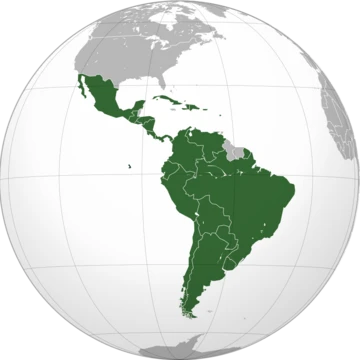
Guarulhos
Second most populous city in São Paulo state, after the capital.

Guarulhos is a city and municipality in the Metropolitan Region of São Paulo, São Paulo state, Brazil. It is the second most populous city in the state after the capital, the 13th most populous in Brazil, and the most populous city in the country that is not a state capital.
- state_rank
- Second most populous in São Paulo state
- airport
- São Paulo/Guarulhos International Airport (GRU), busiest in Brazil and South America by passenger traffic
Lore & Background
Its origin traces back to a bandeirante settlement in the 16th century. The early 20th century saw the arrival of the railway and electricity, and during the 1930s the city witnessed actions of the Federal Intervention and the Constitutional Movement.
Reader's Guide
Guarulhos holds significance as a major economic and transportation hub in Brazil. Its international airport, the largest in South America, serves as the primary gateway to São Paulo and the country. The municipality also contains parts of the Cantareira State Park and the Mananciais do Rio Paraíba do Sul Environmental Protection Area, which protect water supplies for metropolitan São Paulo. Its population growth, tripling between 2000 and 2006 relative to the state, underscores its role as a major urban center. The city is the seat of the Roman Catholic Diocese of Guarulhos and is served by the Rodovia Presidente Dutra highway and Line 13–Jade of the commuter rail system, with a future metro line planned.
Did You Know?
- Guarulhos is the most populous city in Brazil that is not a state capital.
- The São Paulo/Guarulhos International Airport is the busiest airport in Brazil and South America by passenger traffic.
- The city's name likely derives from the Tupi word 'gûaru' (warrior/guardian) or from the Guarulhos subgroup of the Guaianás people.
A City That Defies the Capital
Guarulhos holds a singular position in Brazilian urban geography: it is the most populous city in the entire country that does not serve as a state capital. With a population of 1,345,364 as of 2024, it edges just ahead of nearby Campinas and ranks as the second most populous municipality in São Paulo state, trailing only the capital itself. Nationally, it sits at number thirteen. Spread across 318.68 square kilometers northeast of São Paulo, the city has grown into the tenth-largest suburb on the planet. Its economic weight matches its size—by 2021 it ranked tenth among all Brazilian cities by GDP and second within the state, with a per-capita figure of R$55,084.22. Between 2000 and 2006, its population tripled the growth rate of the broader state, a surge driven largely by industrial expansion that drew workers from across the region. The result is a densely active urban community where most residents participate in the workforce, distributed fairly evenly by gender.
The Gateway to South America
The single most globally visible feature of Guarulhos is the São Paulo/Guarulhos International Airport, bearing the IATA code GRU. Opened in 1985 at Cumbica, it quickly became the largest airport in both Brazil and the entire South American continent, and today stands as the second-biggest in all of Latin America. It carries the formal name International Airport of São Paulo–Guarulhos Governor André Franco Montoro. The site's aviation history stretches further back: in 1945, São Paulo's Air Force Base (BASP) was relocated from the small Campo de Marte field in the capital to the Cumbica neighborhood, establishing a military aviation footprint that would later evolve into the civilian mega-hub. The airport is now linked to the city's commuter rail network via Line 13–Jade, which opened in 2018 and connects the terminal to Engenheiro Goulart station, while a dedicated metro line, Line 19–Sky Blue, was slated for construction beginning in 2021.
Roots in Indigenous Land and Jesuit Mission
The name Guarulhos carries a story that reaches back to the indigenous Guaramomis, also known as the Maromomins, whose Tupi-language name translates to "Eaters" or "big-bellied people." According to the historian José de Alcântara Machado de Oliveira, the city's name derives directly from this people. The settlement that would become the city was first established in 1595 under the name Conceição dos Guarulhos, honoring Our Lady of the Conception. The formal founding came earlier, on December 8, 1560, when Jesuit priest Manuel de Paiva established the village of Nossa Senhora da Conceição. Its strategic position bordered the future São Paulo capital and was flanked by the Tietê river to the south and the Cabuçu de Cima river to the west, making it a defensive outpost against the Tamoios tribe. The village remained part of São Paulo until 1880, when it separated and was called Nossa Senhora da Conceição dos Guarulhos. The shortened name "Guarulhos" was only officially adopted on November 6, 1906, under law number 1,021.
Guardian of the Metropolitan Water Supply
Beyond its role as an industrial and aviation hub, Guarulhos plays a critical environmental role that few suburban cities can claim. The municipality contains a portion of the Cantareira State Park, a 7,917-hectare (19,560-acre) protected area established in 1962 that safeguards a substantial share of the water supplying the greater São Paulo metropolitan region. Even more significantly, Guarulhos also encompasses part of the Mananciais do Rio Paraíba do Sul Environmental Protection Area, a vast 292,000-hectare (720,000-acre) zone created in 1982 specifically to protect the headwaters of the Paraíba do Sul river. Together, these two protected landscapes mean that a large share of the city's territory is dedicated to preserving the natural water systems on which millions of residents depend. This dual responsibility—housing over 1.3 million people while guarding the region's most vital water sources—places Guarulhos in a uniquely demanding position within the metropolitan landscape, balancing dense urban growth with the ecological stewardship of watersheds that stretch far beyond its borders.
Frequently Asked Questions
Who is Guarulhos?
Guarulhos is a Brazilian city and municipality located within the São Paulo metropolitan area. It holds the distinction of being the largest city in Brazil that does not serve as a state capital.
What is Guarulhos's main role or 'power'?
The city is home to São Paulo/Guarulhos International Airport (GRU), which handles the highest passenger volume of any airport in both Brazil and all of South America.
How does Guarulhos rank in population?
It is the second most populous city in São Paulo state, trailing only the capital, and the thirteenth most populous city across all of Brazil.
Why is Guarulhos important to the region?
As the primary international gateway for the São Paulo metropolitan area, its airport makes the city a critical transportation hub connecting millions of travelers to global destinations.
Where exactly is Guarulhos located?
Guarulhos sits in the state of São Paulo, Brazil, as part of the broader metropolitan region surrounding the capital city.
More in Latin American Cities 1-24
Elsewhere in the Latin American Cities universe
Spotted an error? Know more?
This is a living reference — every entry is fact-audited, and reader corrections feed straight into our audit queue. Suggest an edit · See this site's audit record